Active Case
BlackRock TCP Capital Corp. (TCPC) Securities Class Action Lawsuit Update
BlackRock TCP Capital Corp. (TCPC) Investors Sue Over Alleged NAV Inflation and Portfolio Valuation Failures

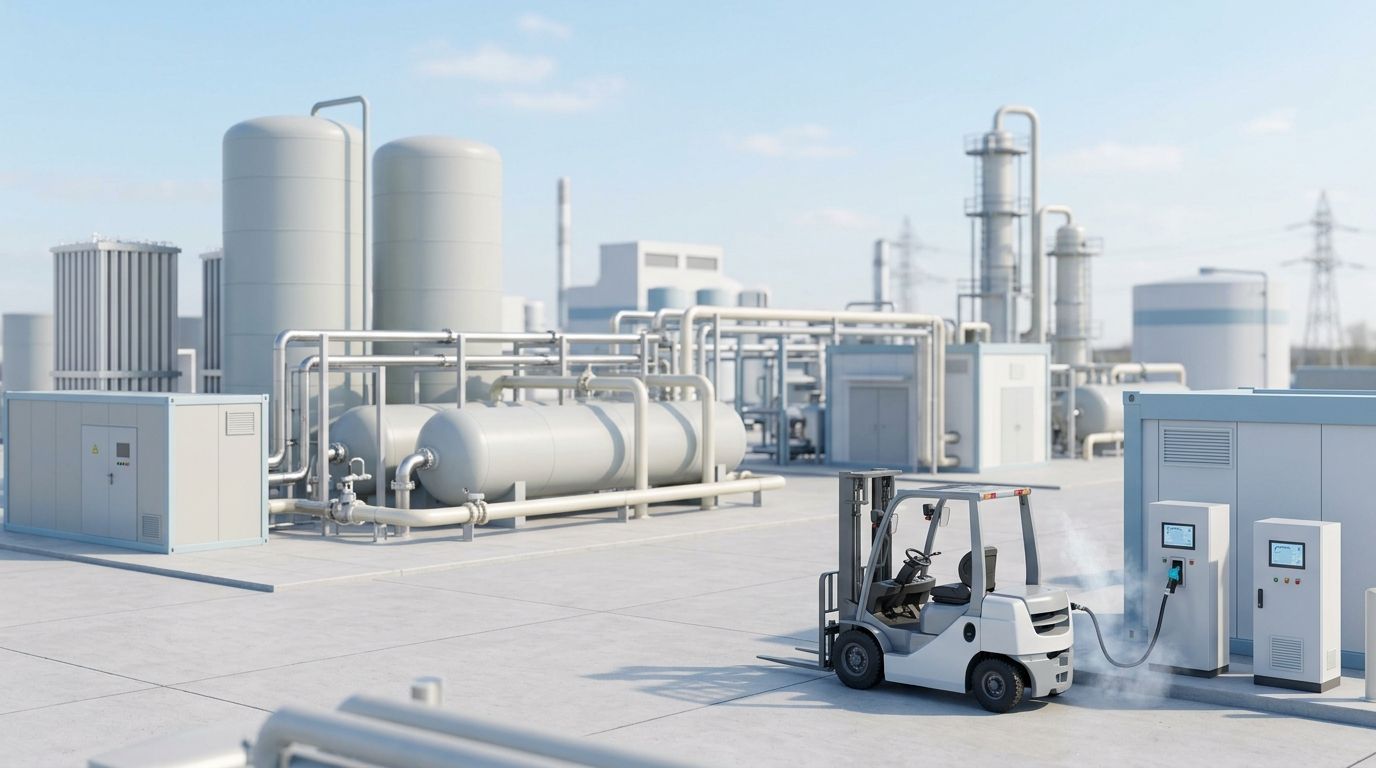
Plug Power Lawsuit Alleges Investors Were Misled About $1.66 Billion DOE Loan and Hydrogen Expansion Plans
Learn about securities lawsuits tied to your portfolio and recover money!
Plug Power Inc. is facing a federal securities class action alleging misstatements and omissions concerning the Company’s DOE loan financing and hydrogen production facility plans. Investors allege the hydrogen fuel cell company repeatedly assured the market it was on the verge of building a nationwide network of hydrogen production plants, backed by a $1.66 billion loan guarantee from the U.S. Department of Energy. According to the complaint, that confidence masked mounting uncertainty about whether the loan funds would ever materialize and whether the projects themselves would be built.
The lawsuit claims that when the truth began to emerge in late 2025, Plug Power’s stock fell sharply across multiple disclosures, erasing significant shareholder value and prompting allegations of violations of federal securities laws.
“Most PLUG shareholders never file or join the class action, which means they miss out on potential recovery funds,” said Attorney Joseph Levi.
Plug Power Inc. is a hydrogen fuel cell company that provides turnkey solutions for electric mobility and stationary power markets in North America and Europe. The complaint alleges Plug Power develops hydrogen infrastructure, including hydrogen production plants, and needed significant additional capital to support those plans.
To fund that expansion, Plug Power pursued financing through the Department of Energy’s Loan Programs Office. In January 2025, the company announced it had “closed” a $1.66 billion DOE loan guarantee, describing it as a multi-draw term facility intended to finance up to six hydrogen production and liquefaction projects across the United States. The complaint alleges the first project tied to the DOE Loan was a green hydrogen plant in Graham, Texas.
The complaint alleges the company described the DOE loan as financing multiple hydrogen production facilities, while the loan remained subject to technical, financial, and performance-based conditions precedent.
Throughout the class period, Plug Power executives repeatedly described the DOE loan as secure and projected that construction of the Texas hydrogen plant could begin in the coming months.
In a March 3, 2025 press release, the company stated it anticipated “kicking off the project in the coming months,” estimating total capital expenditures of roughly $800 million for the Texas facility, with approximately $400 million expected to come from the DOE loan. Executives told analysts that remaining steps were merely administrative, described as “crossing the T’s and dotting the I’s.”
On earnings calls, Plug Power’s CEO emphasized ongoing discussions with the DOE and projected that construction would begin by the fourth quarter of 2025. The CFO similarly downplayed obstacles, characterizing the process as routine bureaucracy rather than substantive risk.
At the same time, executives dismissed alternative liquidity strategies. When asked about data-center backup power opportunities in early 2025, Plug Power’s CEO told analysts they should not expect revenue from that segment “of any size over the next two to three years.”
The complaint alleges these assurances were misleading because the company had overstated the likelihood that DOE funds would ultimately become available and understated the risk that Plug Power would pivot toward more modest projects with less commercial upside.
The alleged corrective process unfolded over several months in late 2025.
In a October 7, 2025 press release, Plug Power announced that its CEO and president would step down shortly before the company was expected to report third-quarter financial results. The market reacted immediately, sending shares down more than six percent in a single session.
The next day, Plug Power disclosed a warrant-related financing transaction that differed sharply from earlier representations tying capital raises to hydrogen plant construction. Instead, proceeds were described as intended for “working capital and general corporate purposes,” a shift the complaint characterizes as inconsistent with prior statements.
On November 10, 2025, Plug Power reported quarterly results and announced it had suspended activities under the DOE loan program while pursuing liquidity through a nonbinding letter of intent tied to data-center electricity rights. Executives described this transaction as “far along,” despite earlier statements dismissing near-term relevance of that business line. Finally, a media report confirmed that Plug Power had suspended plans to construct the six hydrogen facilities underlying the DOE loan. According to the complaint, this disclosure put the entire $1.66 billion financing at risk.
Each disclosure coincided with measurable stock declines. Shares fell following executive departures, again after revised financing disclosures, and most sharply after confirmation that hydrogen construction plans were suspended.
Over the course of these events, Plug Power’s stock declined from approximately $3.87 per share to about $2.25 per share, representing cumulative losses exceeding twenty percent in a matter of weeks. The complaint alleges these declines were directly tied to the market learning that the company’s prior statements about the DOE loan and hydrogen expansion were materially misleading.
Plaintiffs claim that investors purchased Plug Power securities at artificially inflated prices and suffered damages when the alleged truth was revealed.
The action is pending in the United States District Court for the Northern District of New York. The proposed class includes all persons and entities that purchased or acquired Plug Power securities between January 17, 2025, and November 13, 2025. Defendants include Plug Power Inc., its former Chief Executive Officer, and its Chief Financial Officer. The complaint asserts claims under Sections 10(b) and 20(a) of the Securities Exchange Act of 1934 and Rule 10b-5.
Scienter allegations focus on executives’ knowledge of the DOE loan’s conditional nature, their involvement in discussions with the DOE, and their alleged awareness that alternative liquidity strategies were being explored while publicly minimizing those risks.
Investor sentiment around Plug Power shifted significantly during 2025 as optimism surrounding the company’s hydrogen expansion plans gave way to concerns about execution and liquidity.
Early in the year, discussions among retail investors on platforms such as Stocktwits and Reddit frequently highlighted the $1.66 billion Department of Energy loan guarantee as validation of Plug Power’s long-term strategy to build a network of U.S. hydrogen production facilities, including the planned Graham, Texas project.
That tone began to change as the year progressed and construction activity tied to the DOE loan failed to materialize. Investor discussions increasingly focused on delays surrounding the Texas facility and the broader uncertainty about the timing of Plug Power’s hydrogen infrastructure rollout.
Sentiment weakened further in October and November 2025 following a series of disclosures cited in the complaint, including leadership changes, new financing transactions, and the company’s decision to pursue liquidity initiatives tied to data-center electricity rights. When reports later confirmed that Plug had suspended activities related to the DOE loan program and the six hydrogen plants associated with it, discussion across retail forums became increasingly skeptical.
By mid-November, many investors were focused less on the company’s long-term hydrogen ambitions and more on near-term liquidity and execution risk, particularly as Plug Power’s share price declined during the same period.
External market commentary also turned more cautious as the difference widened between Plug Power’s January description of the DOE financing and its later November decision to suspend related activities while pursuing alternative liquidity measures. Reuters characterized the move as a shift toward higher-return opportunities and the data center market, underscoring how materially the company’s near-term focus had changed.
Analyst and investor-facing commentary in late 2025 and early 2026 continued to focus on Plug Power’s liquidity needs, execution risk, and path to profitability. Coverage noted that, even as the company sought to improve liquidity through monetization efforts and later capital raises, cash burn and financing pressure remained central to the investment debate.
Within that context, the complaint’s theory tracks a broader market concern: whether Plug Power’s earlier public messaging about the DOE loan and hydrogen expansion plans conveyed the conditional and uncertain nature of those initiatives with sufficient clarity.
Central to the allegations are Plug Power’s SEC filings and earnings communications, which described the DOE loan as “closed” while acknowledging, but allegedly minimizing, the conditions required for funding. Plaintiffs also allege violations of Item 303 of Regulation S-K, asserting that Plug Power failed to disclose known trends and uncertainties regarding the true likelihood of receiving DOE funds and completing the hydrogen facilities necessary to access that capital.
The complaint contends these omissions deprived investors of a clear picture of the risks embedded in Plug Power’s growth strategy.
The Plug Power lawsuit centers on a straightforward question: whether investors were given a clear picture of the risks surrounding the company’s hydrogen expansion plans and the $1.66 billion Department of Energy loan tied to that strategy. For shareholders, the case highlights the importance of scrutinizing conditional financing, government-linked funding programs, and the language companies use to describe future-defining projects. For the broader market, it serves as a reminder that optimism, when untethered from disclosure, can become a liability.
The case now moves forward in federal court, where the allegations will be tested. As with all securities litigation, the claims remain allegations and the defendants deny wrongdoing. The lawsuit nonetheless highlights how closely investors watch the gap between ambitious growth plans and the financing required to bring them to life.
How to Join the Plug Power Inc. (PLUG) Class Action
Disclaimer: This shareholder alert is for informational purposes only and does not constitute legal advice. Consult a qualified attorney for personalized guidance. No specific outcomes are guaranteed.
BlackRock TCP Capital Corp. (TCPC) Investors Sue Over Alleged NAV Inflation and Portfolio Valuation Failures

Introduction to CoreWeave, Inc. (CRWV) Securities Class Action Lawsuit
![Mereo Biopharma Group Plc (MREO) Securities Class Action Lawsuit Update [February 17, 2026]](https://media.suewallst.com/cms-dev/MREO_Blog_Cover_d86629a198.jpeg)
Mereo BioPharma faces a securities class action after Phase 3 setrusumab trials failed, triggering major stock declines and investor losses.